
The Ultimate Guide to Concreting in Melbourne

Updated: Feb 2
Why Concrete is Important in Melbourne
In a city renowned for its "four seasons in one day" weather patterns and diverse geological makeup, professional concreting serves as the literal foundation for property longevity and aesthetic appeal. Melbourne’s varied terrain demands far more than a one-size-fits-all approach; it requires specialised knowledge of how local environments directly impact structural integrity over time.
For homeowners in Doncaster and Templestowe, high-quality concreting is the primary defence against soil erosion on undulating blocks, where a well-engineered Exposed Aggregate driveway provides the essential grip and runoff management needed for steep inclines during heavy Victorian downpours. Meanwhile, in the established residential heartlands of Glen Waverley and Wheelers Hill, robust concrete installations are vital to counteract the natural expansion and contraction of reactive clay soils, which can easily cause unreinforced slabs to shift or buckle. Beyond new builds, preserving the architectural character of an area is equally significant, which is why Concrete Resurfacing has become a critical tool for residents in Oakleigh looking to restore weathered pathways without the environmental or financial cost of a full demolition. Ultimately, whether you are exploring modern concrete colours and textures trends or considering a durable spray-on finish.
This ultimate guide is designed specifically for the Melbourne context, taking into account our often temperamental "four seasons in one day" climate, the reactive clay soils, and the city’s evolving architectural styles. We will dive deep into everything you need to know about the types, techniques, and finishes available to ensure your next concreting project is a success that lasts for decades.
The Fundamentals of Concrete -More Than Just Cement
Before pouring, it’s essential to understand what concrete actually is. Concrete is a composite material made from three primary components: aggregates (sand and gravel), water, and cement. The cement acts as the binder, reacting with water through a process called hydration to form a rock-hard paste that binds the aggregates together.

Concrete vs. Cement: Clarifying the Terms
A common misconception is using the terms concrete and cement interchangeably.
Cement (specifically Portland cement) is the powdered ingredient, the "glue."
Concrete is the final, hardened product, the structure itself.
The Science of Strength: Curing and the Water-Cement Ratio
The strength and durability of concrete are largely determined by two factors:
The Water-Cement (W/C) Ratio: This is the most critical factor. A lower W/C ratio generally means higher strength and less permeability, making the concrete more durable against freeze-thaw cycles and water damage: a crucial consideration for Melbourne’s varying temperatures.
Curing: The process of maintaining adequate moisture and temperature after pouring to allow the cement to fully hydrate. In Melbourne’s climate, contractors must be diligent. On hot summer days, concrete must be kept wet or covered to prevent rapid drying (which causes cracking). In cold weather, it must be protected from freezing until adequate strength is achieved. Curing takes 28 days to reach full strength, but basic strength is typically achieved within a week.
The Role of Reinforcement
For structural integrity, particularly with Melbourne’s expansive clay soils, reinforcement is non-negotiable.
Steel Mesh (Rebar): Steel reinforcement mesh is laid within the concrete slab to provide tensile strength, helping the concrete resist cracking due to soil movement, temperature changes, and heavy loads (like vehicles on a driveway).
Fibre Reinforcement: Often used in conjunction with steel or sometimes alone in non-structural applications, synthetic or steel fibres are mixed into the concrete to help control plastic shrinkage cracking that occurs during the initial setting phase.
Section 2: Concreting Services in Melbourne - Applications Across the City
Concreting services are generally divided into three major categories based on the scale and application of the project.
2.1 Residential Concreting
Residential projects focus on enhancing the functionality, safety, and aesthetic appeal of private homes.
Driveways: The most common residential job. Melbourne driveways require robust design due to heavy vehicle load and movement from the underlying soil. Options range from simple broom finish to premium exposed aggregate.
Patios and Alfresco Areas: These focus heavily on finish, as they are high-visibility, entertainment spaces. Finishes like polished, stamped, or coloured concrete are often chosen to complement the home’s exterior.
Footpaths and Sidewalks: Essential for safe, accessible access around the property. Often uses a broom or smooth trowel finish for slip resistance.
House Slabs (Foundations): Structural slabs are the most critical element, requiring strict adherence to Australian Standards (AS 3600) and often geotechnical reports due to Melbourne’s reactive soils. Waffle pods are a common solution to mitigate soil movement.
Pool Surrounds: Requires a highly durable, non-slip finish, with exposed aggregate or a specific textured coating being the preferred options.

2.2 Commercial Concreting
Commercial projects are defined by larger scale and the need to withstand higher traffic and industrial-grade loads.
Car Parks and Access Roads: Requires high-strength concrete (often 32 MPa or higher) with expansion joints properly placed to manage the extensive thermal movement across large surface areas.
Warehouse and Factory Floors: Demand extremely high flatness (FF/FL numbers) and abrasion resistance to handle forklifts, heavy machinery, and constant use. Polished concrete is popular here for its durability and dust-reduction properties.
Retail and Office Space: Aesthetics and cleanliness are key. Polished concrete floors offer a modern, low-maintenance, and highly durable finish that is common in Melbourne’s CBD and suburban retail precincts.
Loading Docks: Requires specialised, high-impact resistance concrete and often specific drainage solutions.
2.3 Industrial Concreting
Industrial projects involve highly specialised engineering and construction for complex infrastructure.
Bridges and Overpasses: Utilising high-performance and often pre-stressed concrete to handle extreme loads and spans.
Water Treatment and Storage: Requires low-permeability concrete with chemical resistance to handle acidic or corrosive substances.
Civil Infrastructure: Includes railway bases, tunnels, retaining walls, and specialised foundations where precision and maximum durability are paramount.
Section 3: Essential Concrete Mix Types for Melbourne Projects
The correct concrete mix is critical for ensuring the longevity of your investment. Mixes are defined by their target strength, measured in megapascals (MPa), and the additives used.
Mix Type | Standard Strength (MPa) | Primary Application in Melbourne | Key Feature |
N20 | 20 MPa | Footpaths, non-traffic areas, small shed slabs | Lowest strength, suitable for light use. |
N25 / N32 | 25 - 32 MPa | Residential driveways, house slabs, garage floors | Standard residential strength to handle vehicle loads. |
N40+ | 40+ MPa | Commercial car parks, industrial floors, high-stress areas | High compressive strength for heavy machinery. |
Slab/House Mix | Varies (25-32 MPa) | Structural house slabs (often with Waffle Pods) | Designed to meet specific engineering standards for reactive soils. |
Polypropylene Fibre | - | Any application | Fibres added to the mix to reduce surface cracking. |
Retarder Additive | - | Hot days (Melbourne summer) | Slows the initial setting time, giving crews more time to finish the surface. |
Accelerator Additive | - | Cold days (Melbourne winter) | Speeds up the setting time, crucial for fast turnaround or cold weather pours. |
Addressing Melbourne’s Reactive Soil
Melbourne is notorious for its highly reactive, heavy clay soils, particularly in the outer eastern and western suburbs. These soils swell significantly when wet and shrink when dry, leading to movement that can crack conventional slabs.
Professional Melbourne concreters will always recommend:
Engineered Footings: Deep footings that extend below the reactive layer.
Waffle Pod Slabs: A system using polystyrene pods that create voids beneath the slab, allowing the soil to move without directly impacting the concrete.
Correct Reinforcement: Using the correct size and placement of steel mesh as per engineering specifications.

Section 4: The Ultimate Guide to Concrete Finishes - Choosing the Right Look
The finish is where functionality meets aesthetics. Choosing the right finish depends on the desired look, budget, and required level of slip resistance.
4.1 Exposed Aggregate Concrete (The Melbourne Favourite)
What it is: Exposed aggregate involves removing the top layer of cement paste to reveal the decorative stones (aggregate) mixed within the concrete. This provides a natural, textural look.
Why it’s Popular in Melbourne:
Aesthetics: Offers a premium, natural stone look that complements modern, established, and even coastal architecture.
Durability: Highly resistant to wear and tear.
Slip Resistance: Excellent grip, making it ideal for driveways, pool surrounds, and steep paths.
Choosing the Aggregate: The colour and size of the exposed stone can be customised. Local suppliers offer bluestone, granite, quartz, and river pebbles in various colour palettes, from cool greys and blues (popular in inner Melbourne) to warm earthy tones (common in the outer suburbs).
4.2 Coloured Concrete
What it is: A pigment is added to the concrete mix during batching to create a uniform colour throughout the slab.
How it’s Used:
Subtle Tones: Used to soften the harshness of plain grey, often using charcoal, sandstone, or earthy brown tones.
Enhancing Stamping: Coloured concrete forms the base layer for stamped or patterned concrete.
Considerations: Colour consistency requires expert batching and pouring. Lighter colours reflect heat, which can be beneficial for patios and pool areas in summer.
4.3 Stamped and Patterned Concrete
What it is: A layer of powdered colour release agent is applied to the wet concrete, followed by pressing large, flexible mats (stamps) onto the surface to imprint a pattern.
Popular Patterns:
Cobblestone: Mimics old European pavers.
Slate and Ashlar: Provides a natural stone tile look.
Timber Plank: Replicates the texture of wood decking.
Application: Best suited for decorative patios, paths, and areas where a high-end, patterned look is desired at a fraction of the cost of real stone.
4.4 Polished Concrete
What it is: A multi-stage process where the concrete surface is ground down using progressively finer diamond abrasives, then treated with a chemical densifier, and finally sealed or burnished to a high-gloss finish.
Where it Shines:
Indoor Spaces: Highly sought after for industrial, warehouse, and contemporary residential interiors in areas like Brunswick, Richmond, and Collingwood.
Benefits: Extremely low-maintenance, dust-proof, hypoallergenic, and reflects light beautifully, reducing lighting costs.
Finish Types:
Full Exposure: Grinding exposes the maximum amount of aggregate, similar to terrazzo.
Salt & Pepper: Minimal grinding exposes only tiny flecks of aggregate.
Cream Finish: No aggregate is exposed; only the top cream layer is polished, resulting in a very uniform look.

4.5 Broom Finish (Textured Finish)
What it is: After the concrete has been screeded and floated, a stiff-bristled broom is pulled across the surface to create uniform grooves.
Purpose: This is the most cost-effective and functional finish for any outdoor area that requires maximum grip, such as steep driveways, ramps, and public sidewalks. The broom texture provides excellent slip resistance, even when wet, which is crucial for safety in Melbourne’s wet weather.
4.6 Trowel Finishes (Smooth or Float)
What it is: The surface is smoothed using a hand trowel or a large power trowel (helicopter).
Float Finish: A slightly rough, even surface created with a wood or magnesium float. Used for base layers where another material (like tiles or carpet) will be laid on top.
Hard Trowel/Steel Trowel: The steel trowel creates a dense, non-porous, smooth surface ideal for indoor garages, warehouse floors, or areas that need to be highly easy to clean. Note: A hard trowel finish is not recommended for external use, as it can be dangerously slippery when wet.
4.7 Spray-On Concreting
What it is: A multi-layered application process where a high-strength, polymer-modified cement coating is applied over an existing concrete slab using a specialized hopper gun, often incorporating decorative stencils and contrasting colours to achieve a slip-resistant, textured finish.
How it works: Using a specialised hopper gun, we spray a decorative concrete coating over the surface. This allows for incredible precision, especially when using stencils to create patterns like brick, tile, or slate.
Key Features:
Texture: The spray-on method creates a fine, slip-resistant texture that is comfortable underfoot but provides great traction.
Versatility: It can be applied in various patterns, allowing homeowners to achieve a "paved" look with the strength and ease-of-maintenance of a single concrete slab.
Section 5: The Unbeatable Benefits of Concreting
Choosing concrete over other materials like pavers, timber decking, or asphalt is a choice for long-term value and peace of mind.
5.1 Exceptional Durability and Longevity
A professionally installed concrete slab can last 40 to 100 years, far outlasting asphalt, gravel, or timber decks which require frequent repair or replacement. Concrete resists heavy loads, extreme temperatures, and general wear and tear, making it perfect for Melbourne's unpredictable conditions.
5.2 Low Maintenance Requirements
Once concrete is sealed, maintenance is minimal. Unlike pavers that can shift, sink, and attract weeds, or timber that requires regular staining and sanding, concrete simply needs occasional cleaning and resealing (typically every 3-5 years) to maintain its appearance and integrity.
5.3 Superior Investment Value
Concrete adds tangible value to a property. A well-designed, high-quality concrete driveway or patio immediately elevates curb appeal, offering a higher return on investment (ROI) compared to cheaper, less permanent solutions.

5.4 Fire and Pest Resistance
As a non-combustible material, concrete offers superior fire resistance, an important consideration in Melbourne’s bushfire-prone fringe areas. Unlike timber, it is also completely resistant to termites and other pests, protecting the structural integrity of the application.
5.5 Versatility in Design
As Section 4 demonstrated, the versatility of concrete is unmatched. Whether you are aiming for a rustic, natural look with exposed aggregate, or a sleek, modernist feel with polished floors, concrete provides the foundational canvas.
Section 6: The Concreting Process - A Step-by-Step Guide
A successful concreting job is a result of meticulous planning and execution. A professional concreter in Melbourne adheres to a rigorous process.
Step 1: Site Preparation and Excavation
This initial stage is often the most important. The site is excavated to the required depth, typically factoring in the slab thickness (e.g., 100mm for paths, 125-150mm for driveways) and the thickness of the sub-base material.
Soil Management: Any unsuitable or contaminated soil is removed. For reactive Melbourne clay, the area may need to be cut to a uniform level to reduce soil movement.
Sub-Base: A layer of crushed rock (typically Class 2 or 3) is laid, compacted, and levelled. The sub-base provides uniform support and excellent drainage beneath the slab, preventing movement and moisture issues.
Step 2: Formwork Installation
Formwork is the framework (usually timber or steel) that moulds the wet concrete into the desired shape and thickness.
Accurate Levels: The forms are installed and checked with laser levels to ensure the final surface slope correctly for drainage. In Melbourne, water must flow away from the house or structure, usually sloping towards the street or a dedicated drain.
Joints: Contraction joints (cuts made in the finished concrete) are planned out at this stage. These relief cuts force the slab to crack along planned lines, managing the inevitable shrinkage that occurs as the concrete cures.
Step 3: Placing Reinforcement and Vapour Barrier
Vapour Barrier (Plastic Sheeting): A durable plastic membrane is laid over the sub-base to prevent moisture from the ground from rising into the concrete slab (or into the house above it), which is critical for structural slabs.
Steel Mesh: The reinforcement mesh is laid within the formwork. Crucially, the mesh must be correctly elevated using plastic or concrete bar chairs so it sits in the middle-to-upper third of the slab, where it can provide maximum tensile strength.
Step 4: Pouring and Vibrating
The concrete truck delivers the specific mix ordered. The concrete is poured into the formwork, usually using a chute or a pump for difficult-to-access sites.
Vibration: The wet concrete is vibrated using a mechanical poker vibrator. This process removes trapped air bubbles, ensuring the concrete consolidates fully around the reinforcement and forms a dense, strong, and defect-free slab.
Step 5: Screeding and Floating
Screeding: A long, straight edge (screed) is pulled across the top of the forms to level the concrete to the exact desired height.
Floating: Once the bleed water has evaporated, a large float is used to further smooth the surface and embed the coarse aggregate slightly beneath the surface, preparing it for the final finishing process.
Step 6: Final Finishing and Sealing
This stage is specific to the chosen finish:
Broom/Trowel Finish: Applied directly after floating.
Exposed Aggregate: The surface is sprayed with a chemical retarder, allowing the underlying concrete to cure while the surface remains soft. After a few hours, the top cement paste is washed off to expose the aggregate.
Stamped/Coloured: Stamping mats are pressed into the surface while it is still plastic.
Finally, once the concrete is fully cured, a quality sealer (acrylic or penetrating) is applied. Sealing is non-negotiable in Melbourne, as it protects the surface from water ingress, staining (oil, leaves), and general wear, significantly extending the life and look of the concrete.

Section 7: Choosing the Right Concreting Professional in Melbourne
Hiring the right concreter is the most critical factor in guaranteeing a quality outcome. In a saturated market like Melbourne, separating the skilled professionals from the cowboys is essential.
7.1 Local Knowledge is Power
Look for a concreter who can demonstrate specific experience in your local Melbourne area, as local geography dictates the success of your project. They should be familiar with the distinct environmental demands of Doncaster, Templestowe, Glen Waverley, Oakleigh, and Wheelers Hill, where varied topography and soil types require a nuanced approach to foundation preparation and drainage.
For instance, our services support these suburbs by addressing specific local challenges:
Doncaster and Templestowe: Our expertise in Exposed Aggregate and advanced drainage systems is essential for the steep, undulating terrain in these areas, ensuring driveways provide maximum traction and manage heavy stormwater runoff effectively.
Glen Waverley and Wheelers Hill: We address the reactive clay soils common in these established eastern suburbs by implementing reinforced sub-bases, preventing the shifting and cracking that can occur with seasonal temperature changes.
Oakleigh: In these high-density residential and commercial pockets, our Concrete Resurfacing and Spray-On Concreting services offer a fast, non-invasive way to modernize old, worn footpaths and crossovers without the disruption of a full demolition.
7.2 Licensing, Insurance, and Qualifications
Always verify the following:
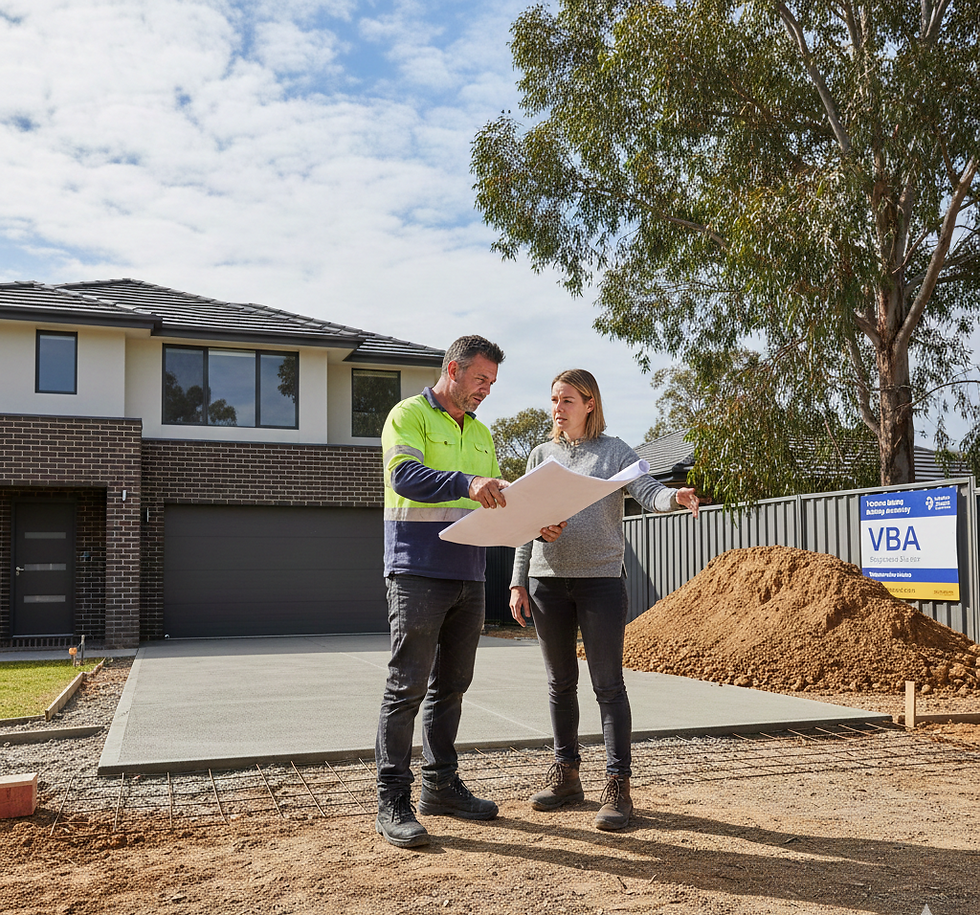
Registered Builder/Contractor: The company should hold the appropriate domestic or commercial building registration with the Victorian Building Authority (VBA), depending on the scope of the work.
Public Liability Insurance: This protects you from any damage or injury that occurs on your property during the construction process. Never hire a contractor without this.
Warranty: A reliable concreter will offer a written warranty on both the materials (the concrete itself) and the workmanship.
The expert should be familiar with these Australian Regualtions:
Local Council Regulations: Including setbacks and stormwater drainage requirements.
Australian Standards: Ensuring all work meets AS 3600 (Concrete Structures) and AS 2870 (Residential Slabs and Footings).
Soil Types: Understanding the engineering requirements for your specific site.
7.3 Portfolio and References
Request to see a portfolio of recent, relevant work. Specifically, ask if you can inspect a driveway or patio the company poured at least two years ago. This allows you to check how well the concrete has held up over time, looking for excessive cracking, colour fading, or aggregate loss.
7.4 Detailed Quoting
A comprehensive quote should not just list a single price. It should break down all the components of the job:
Excavation and Soil Removal.
Cost of Sub-Base Material and Compaction.
Concrete Mix: Clearly state the MPa strength, e.g., "N32 grade concrete."
Reinforcement: Specify the mesh size and type, e.g., "SL82 mesh."
Finish Type and Sealer.
Cost of Labour and Equipment (Pumping/Vibrating).
Be wary of quotes that are significantly lower than others, as this often indicates shortcuts in mix quality, reinforcement, or preparation.
7.5 Project Communication
A good contractor communicates clearly and manages expectations. Given Melbourne’s erratic weather, a concreter should be transparent about potential delays and scheduling, especially regarding ideal pouring and curing conditions.
Laying the Foundation for the Future
Concrete is the ultimate foundation for any durable Melbourne property. By understanding the critical factors: from the correct MPa mix for your traffic load to the necessity of reinforcement in reactive soils and the aesthetic impact of your chosen finish, you are empowered to make informed decisions.
Whether you are installing a high-traffic exposed aggregate driveway or a sleek, polished indoor floor, the key to success lies in meticulous preparation and partnering with a qualified, local professional.
This comprehensive guide should serve as your roadmap. Don't hesitate to use this knowledge to ask your contractor targeted, informed questions about the W/C ratio, the type of mesh, and the intended drainage slope. Lay a foundation you can trust, and it will serve your property brilliantly for generations.
Let me know if you’d like to explore the specific costs associated with different finishes in the current Melbourne market, or if you want a deep dive into the engineering specifics of waffle pod slabs!


Comments